Fountain pen
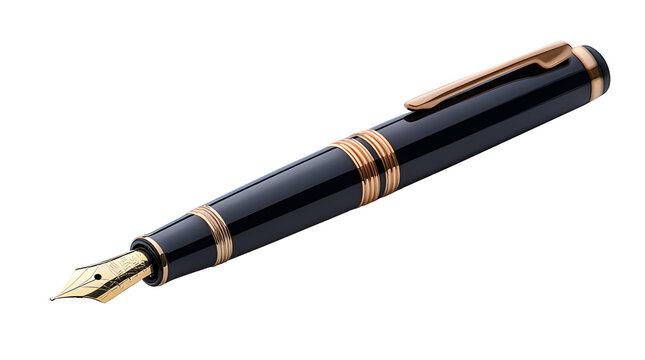
Ink writing, with a cap to protect the nib.
Design · 10 Oct 2026 · 6 min read
Study and unpack how design decisions were made and translated into manufacturable and usable objects in click pens. Submitted by Anukriti Tripathi.
Losing pen caps always made me anxious. Caps get misplaced, ink dries, and using the pen repeatedly becomes inconvenient. I always preferred click pens because they felt faster and easier to use, but I never explored how such a small object contains so much engineering.
Pen mechanisms evolved to improve convenience, portability, speed of use, ink protection and multi-functionality.
Ink writing, with a cap to protect the nib.
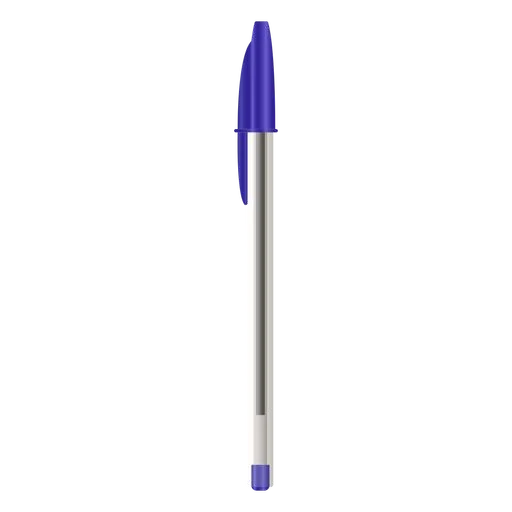
Basic portability.
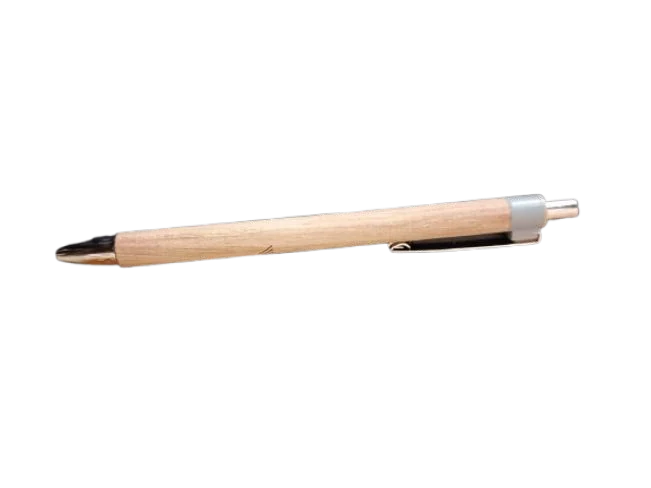
Eliminated the separate cap.
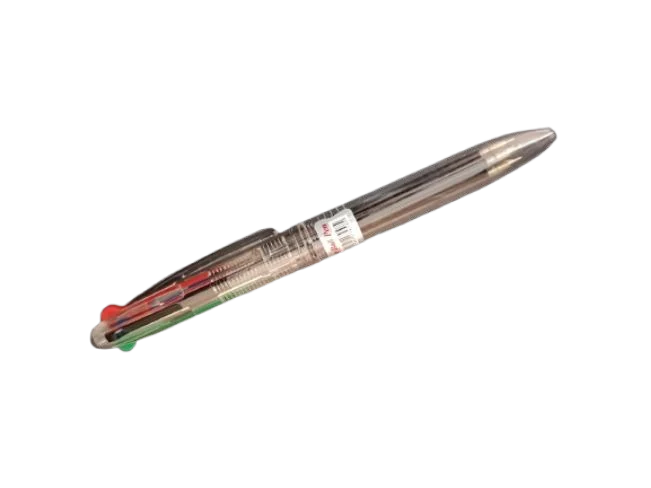
Multiple refills in one body.
The ballpoint pen, with its faster drying ink, sits between the fountain pen and the cap pen in this story.
To further investigate, I dismantled all the pens to see what is inside. To understand the embodiment design of click pens, multiple pen types were physically dismantled and analyzed.
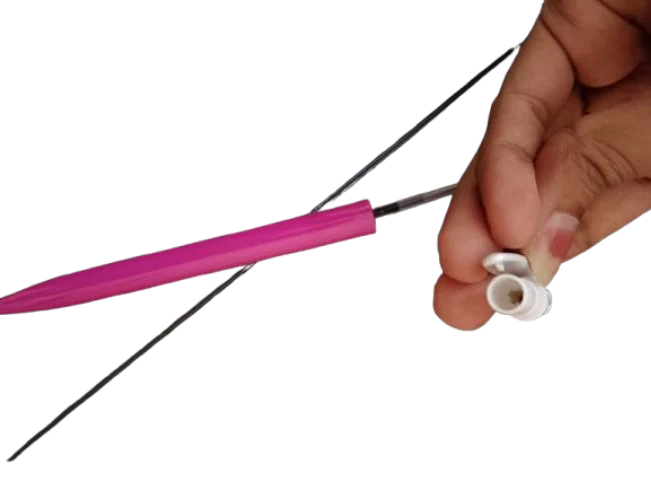
Plastic body, with a refill that has a spring at the bottom.
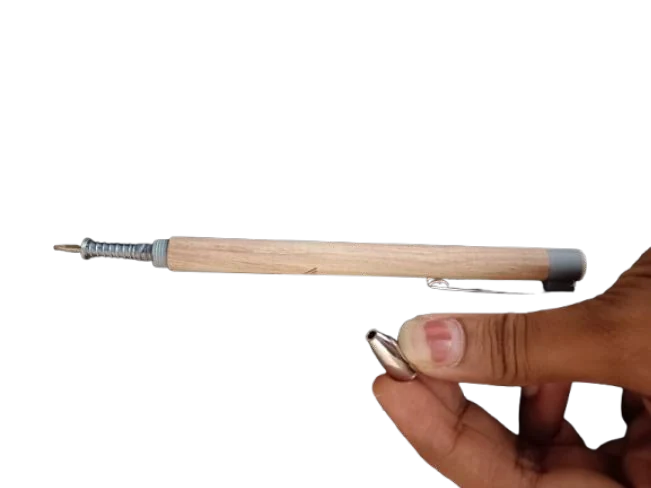
A metal cap and a click part, with the refill moving in and out.
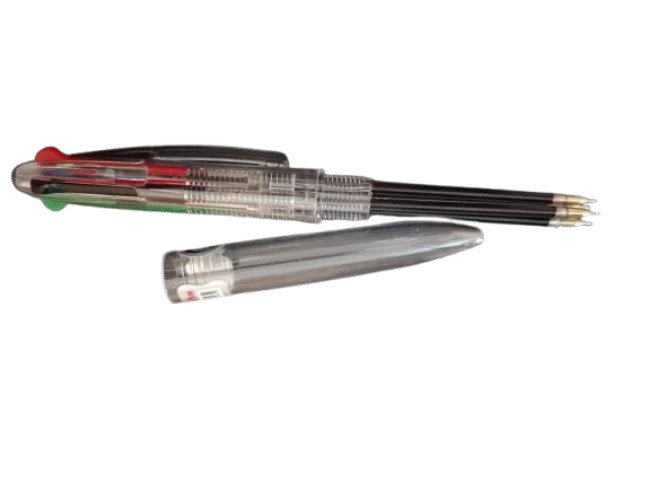
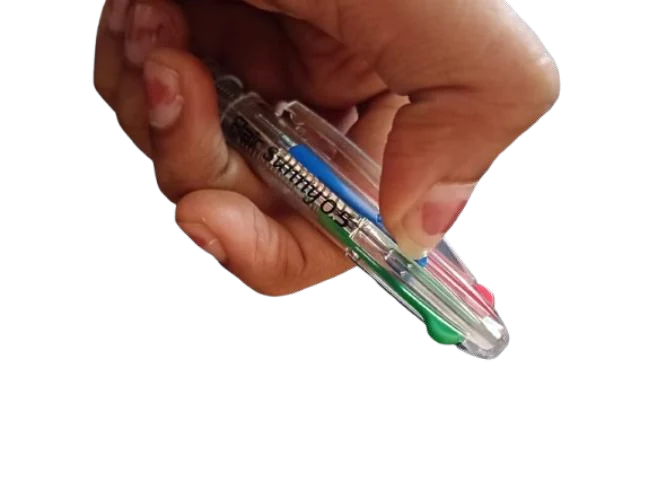
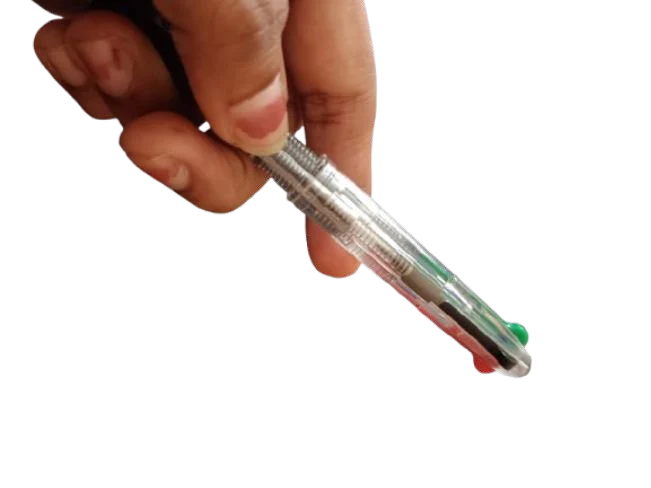
Each color refill sits in its own slot. The spring is at the upper part of the refill, and a small body is pushed out so the refill can move.
The teardown helped to understand:
The retractable mechanism uses spring compression, cam lock interaction and axial movement of the refill.
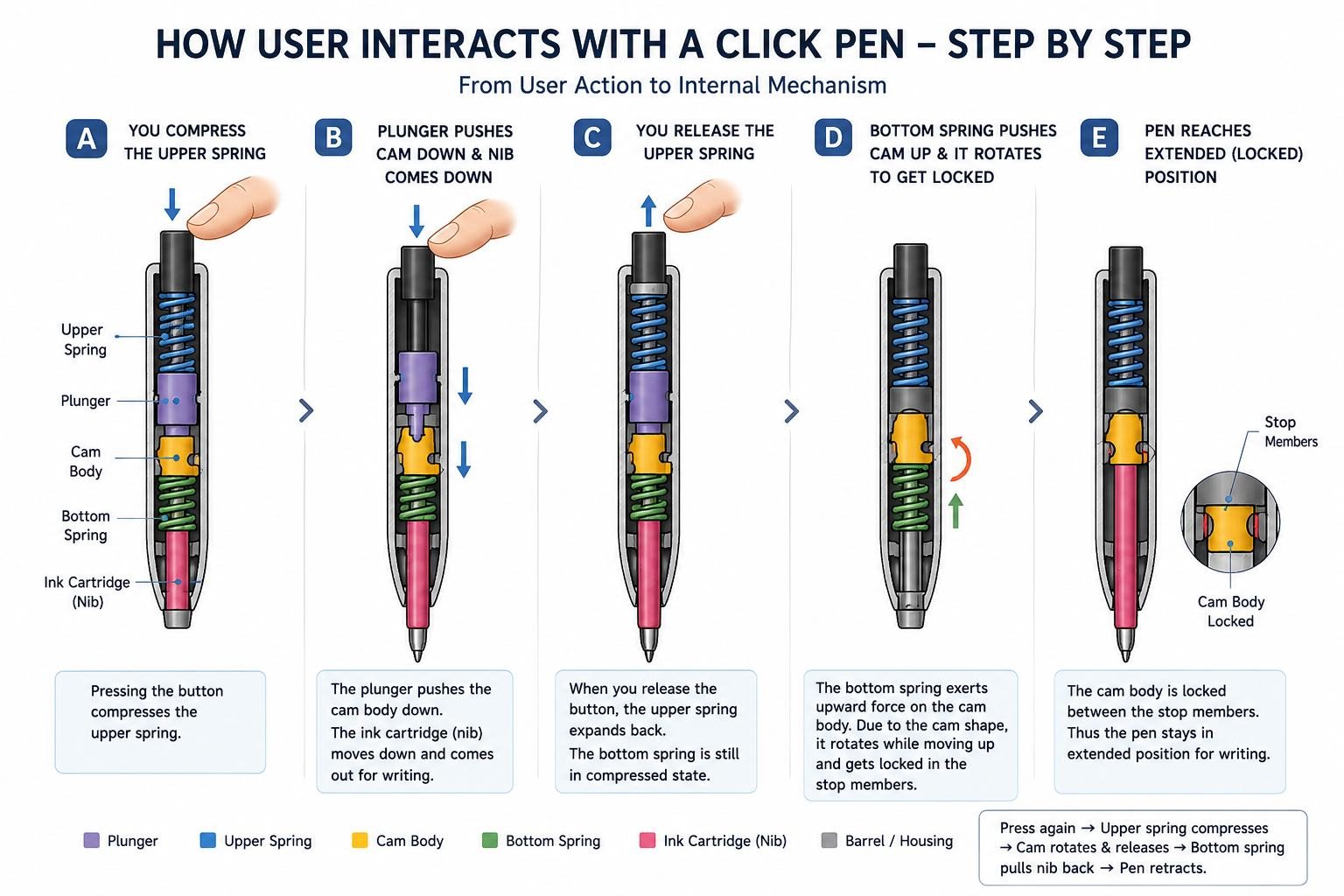
The cylindrical form of the pen gives:
Ergonomic considerations include grip diameter, surface texture, click force, writing comfort and hand posture. The form is directly influenced by internal mechanism arrangement.

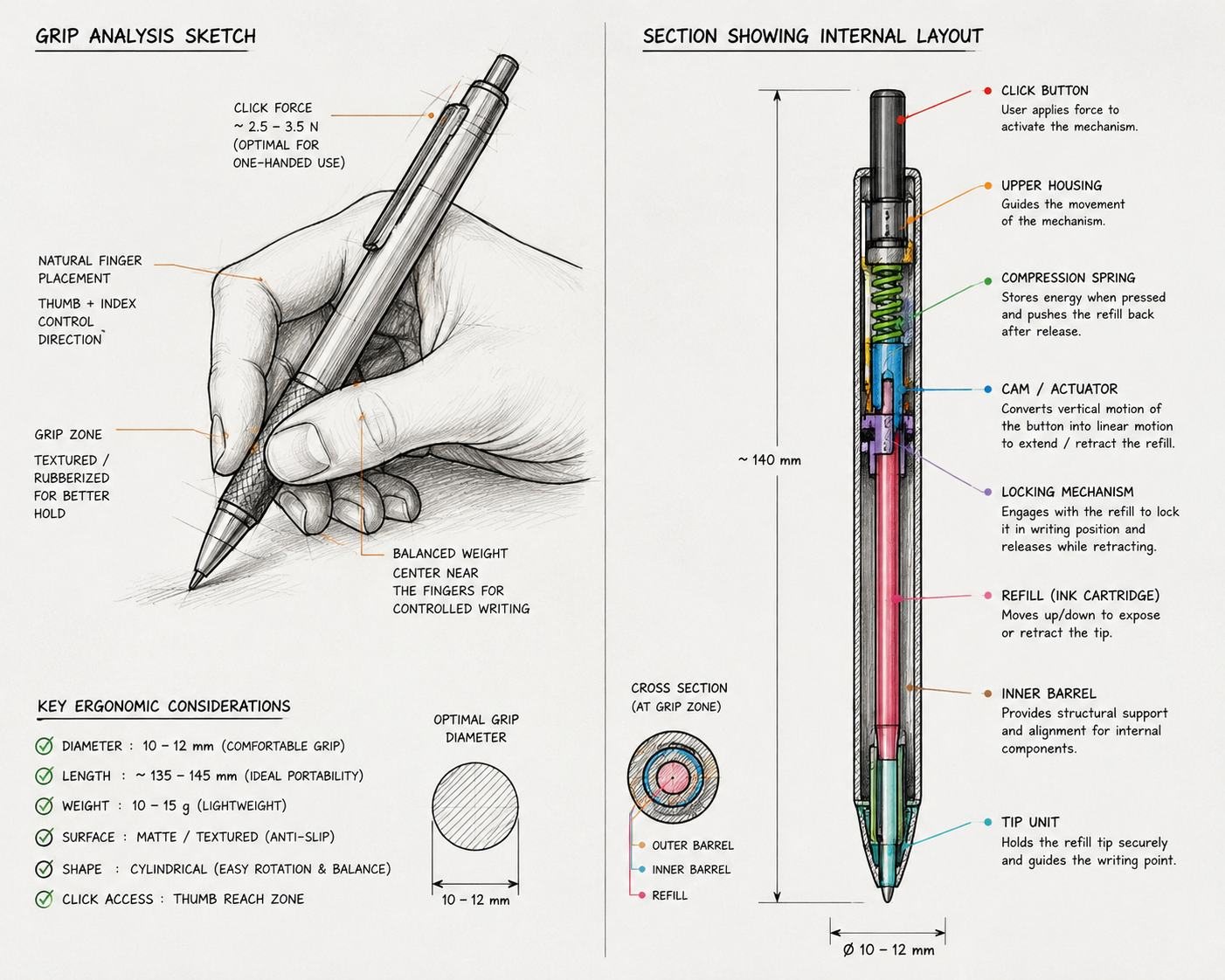
Material selection balances cost, durability, weight, manufacturability and user comfort.
ABS / PP plastic. Light weight and low cost.
Rubber / TPE. Comfort.
Stainless steel. Elasticity.
Brass / steel. Precision.
Polypropylene. Chemical resistance.
Processes used:
The pen is designed for mass production, fast assembly, low manufacturing cost and minimal material usage.
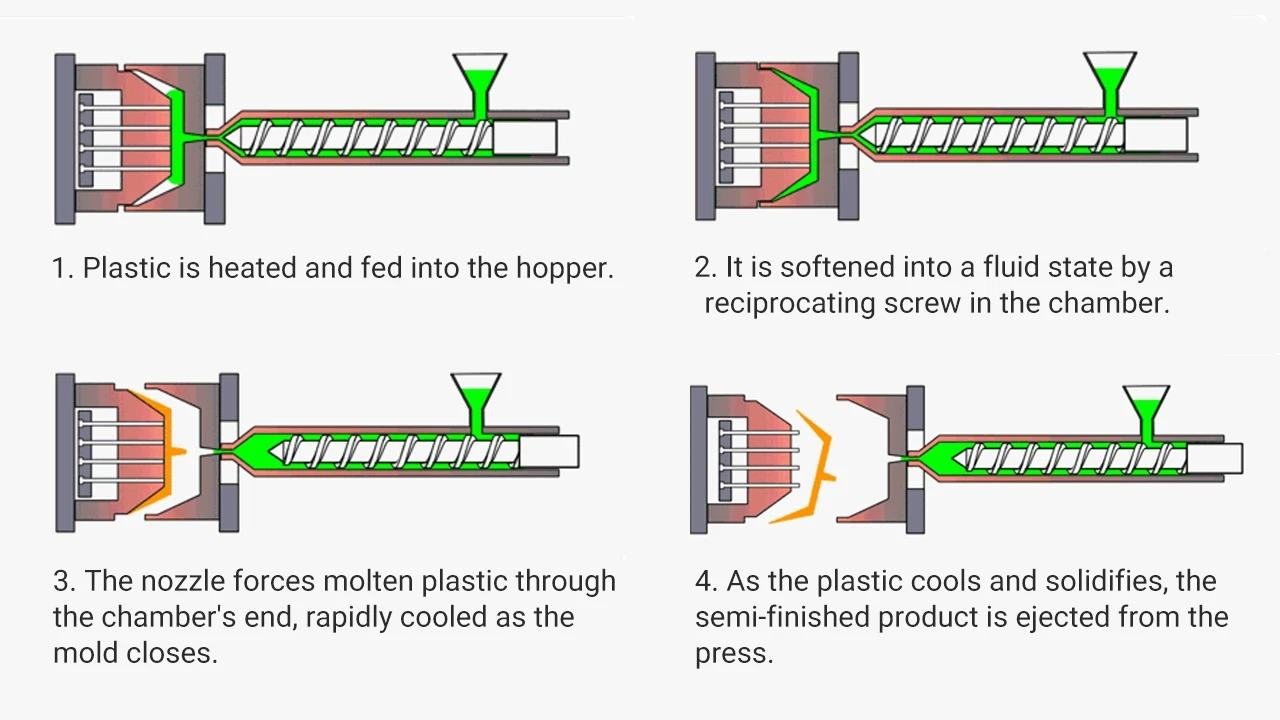
Structural decisions improve strength, assembly efficiency, durability and material optimization. Features:
The embodiment balances durability with low cost manufacturing.
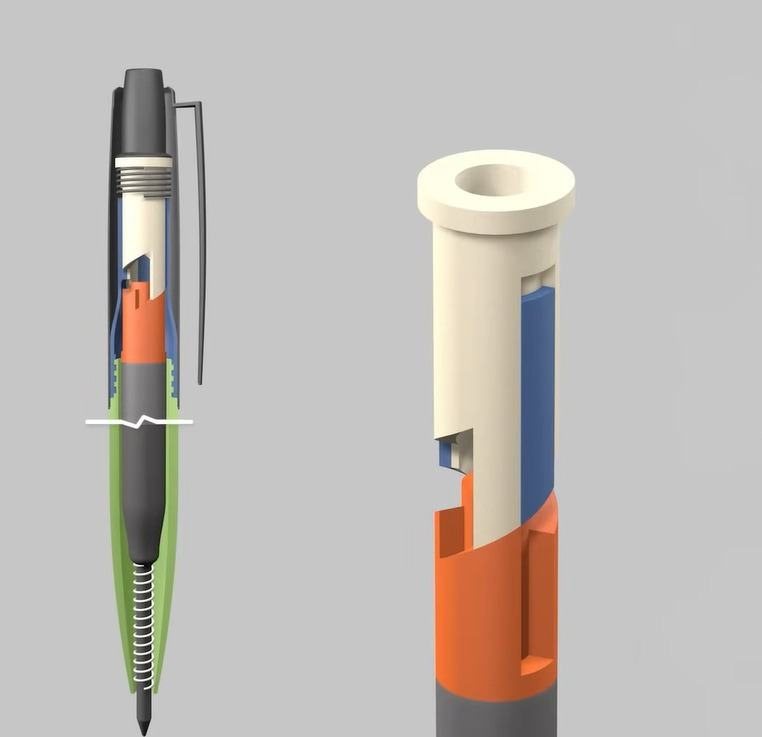
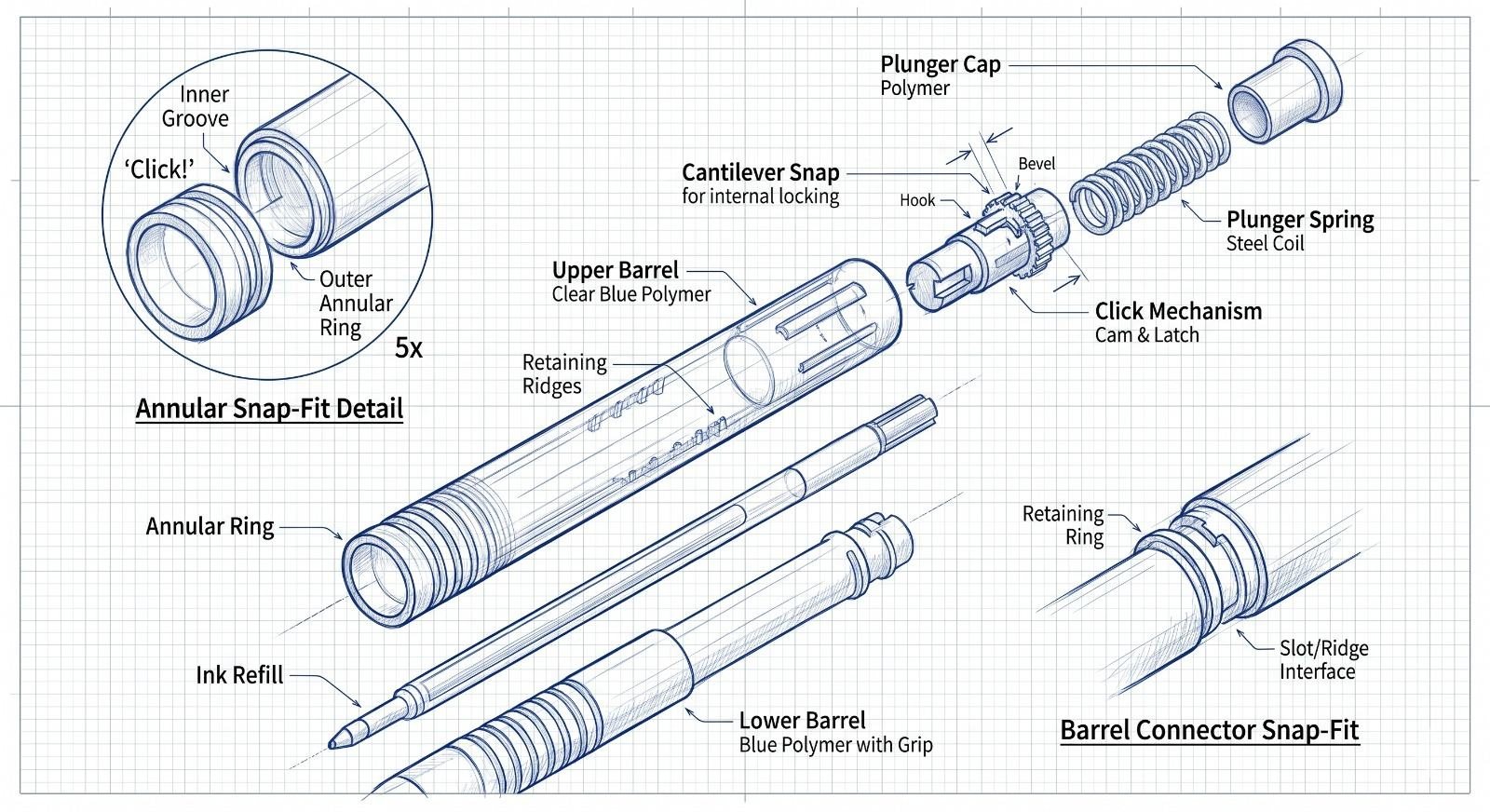
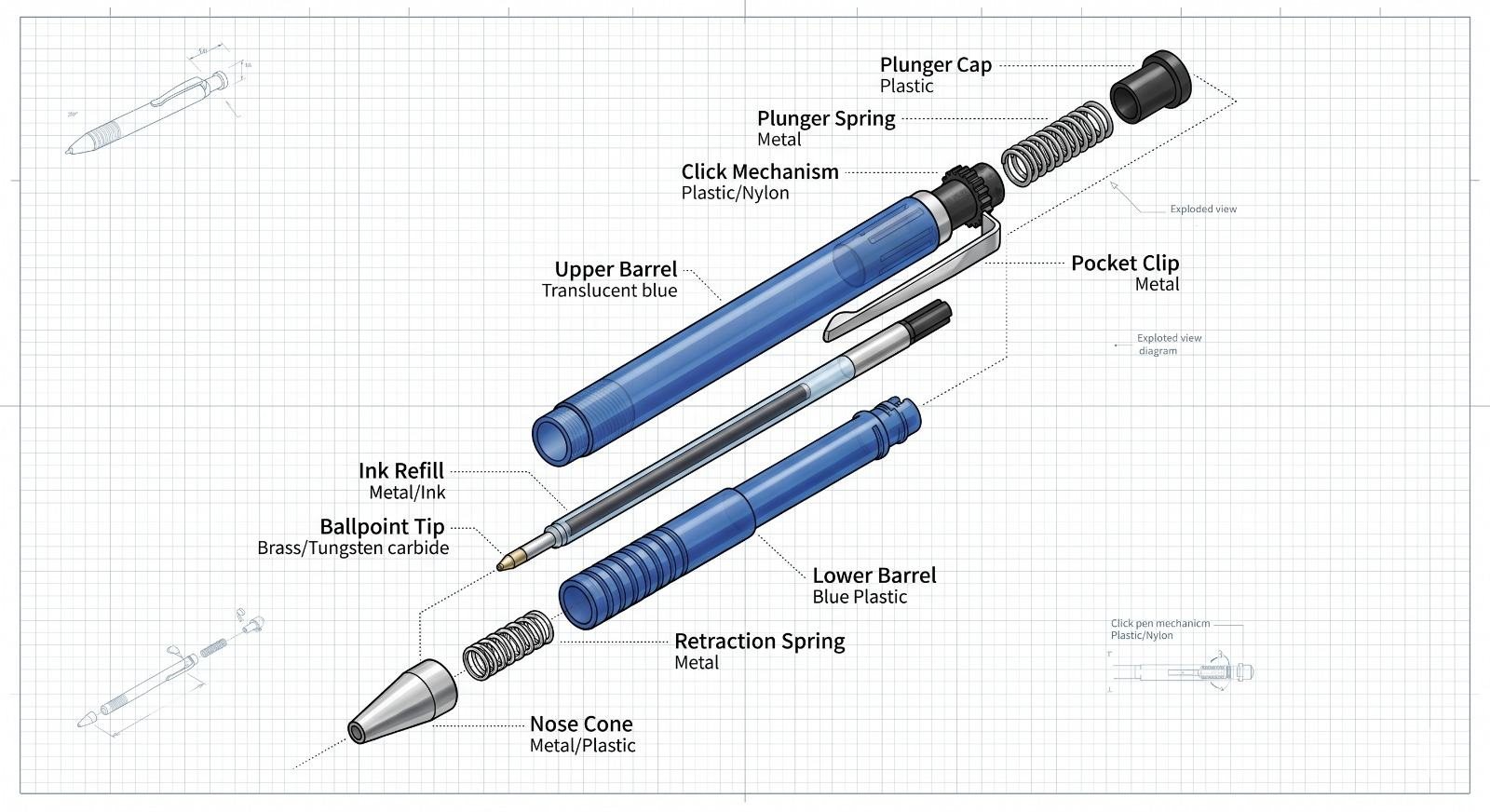
Multi color pens increase embodiment complexity by integrating multiple refills, selector mechanisms, additional springs and a compact internal arrangement. The design demonstrates space optimization, mechanical coordination and increased usability in a compact form.
The click pen demonstrates how embodiment design transforms a simple concept into a manufacturable, ergonomic and mechanically functional product.
The study revealed how:
Even everyday products contain sophisticated engineering and thoughtful design integration.